November 25: Statehood Day in Bosnia and Herzegovina
Prayer Idea
Pray for the people and government of Bosnia and Herzegovina.
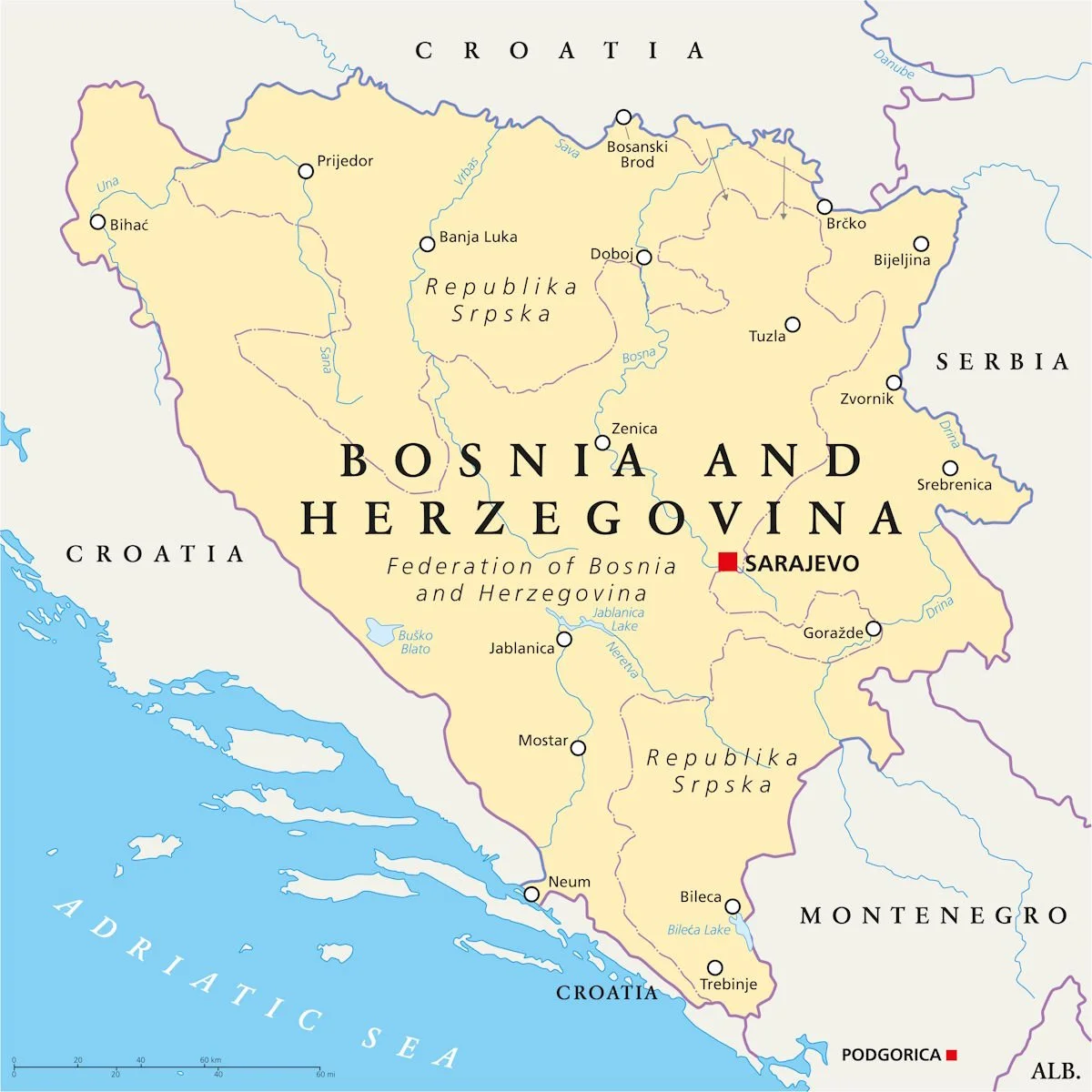
Map by Peter Hermes Furian / Shutterstock.com.
History Note
In ancient times, the modern country of Bosnia and Herzegovina was home to Illyrian peoples. The area became part of the Roman Empire.
Slavic people groups moved into the region in the 6th century AD. Various neighboring empires fought for control during the medieval period. The Ottoman Empire began to exercise authority in the 1400s.
Christians in Bosnia had long been somewhat isolated from both the Roman Catholic Church and the Orthodox Church. During Ottoman rule, a significant number of Bosnians converted to Islam.
Bosnia and Herzegovina came under control of the Austro-Hungarian Empire in the 1870s. Despite linguistic and cultural similarities among people in the region, different religious identities became a point of contention. The people group known as Croats were largely Roman Catholic. The people group known as Serbs were largely Orthodox. The people group known as Bosniaks were largely Muslim.
After World War I, Bosnia and Herzegovina was incorporated into the Kingdom of Serbs, Croats, and Slovenes. This country was renamed Yugoslavia in 1929. Yugoslavia became a Communist state.
In the 1990s, after the fall of the Soviet Union, Yugoslavia was divided into several independent countries. This period saw violent conflict between Serbs, Croats, and Bosniaks that drew in the involvement of NATO countries, including the United States. In 1995 the parties agreed to create the modern country of Bosnia and Herzegovina.
The country is divided into two distinct portions. A Croat-Bosniak federation controls about 51 percent of the land. A Serbian republic controls the rest. The presidency of the country is a group of three people—one Bosniak, one Croat, and one Serb.
Bosnia and Herzegovina has a population of almost 4 million. About 50% of the people are Bosniaks, 31% are Serbs, and 15% are Croats. The languages of all three groups are official, and the three groups largely maintain their traditional religious affiliations.
The Croat-Bosniak portion of Bosnia and Herzegovina celebrates November 25 as statehood day. This was the date in 1943 when a group called the Anti-Fascist Council for the National Liberation of Bosnia and Herzegovina first met. Their goal was to create a country in which all citizens could have equal rights, regardless of their religious or ethnic identity.
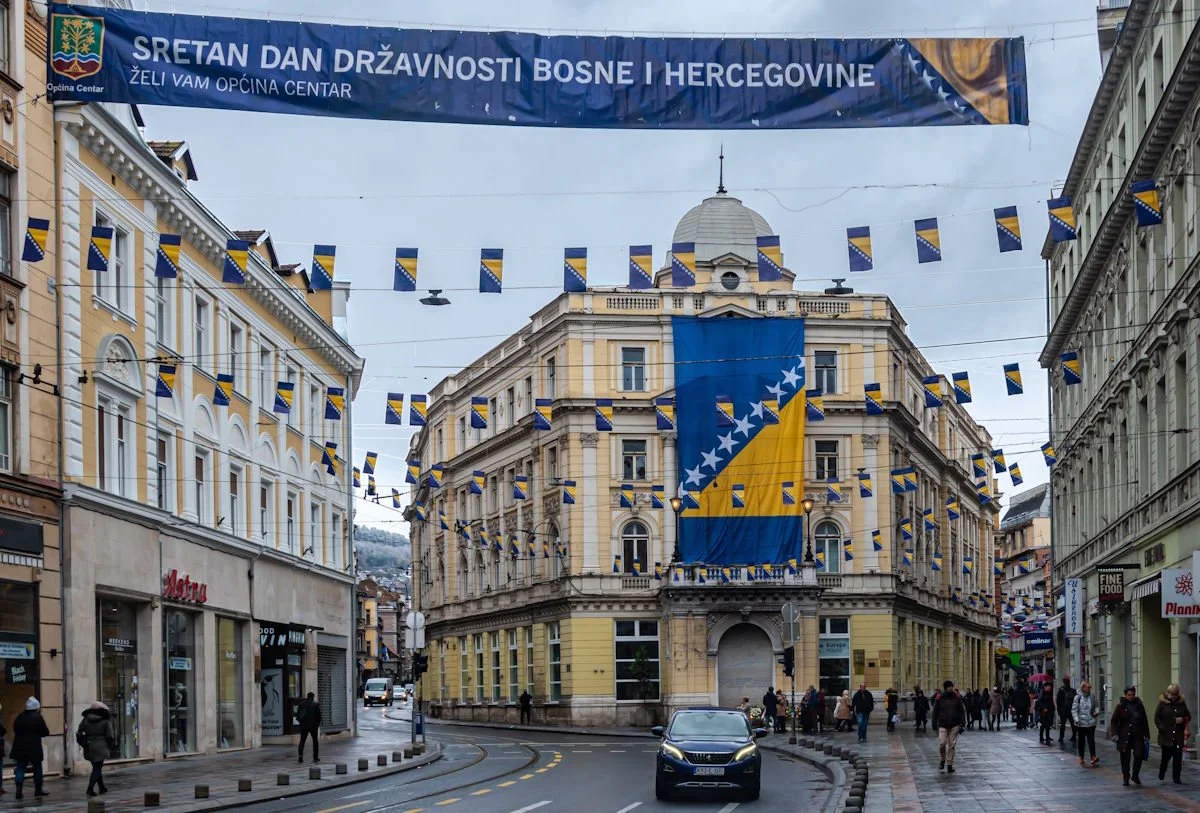
This photo shows decorations for Statehood Day in Sarajevo on November 25, 2023. Photo by Vedad.Ceric / Shutterstock.com.
Learn More
Learn about the complex government of Bosnia and Herzegovina.
Find more resources at Homeschool History.