November 28: Independence Day in Albania
Prayer Idea
Pray for the people and government of Albania.
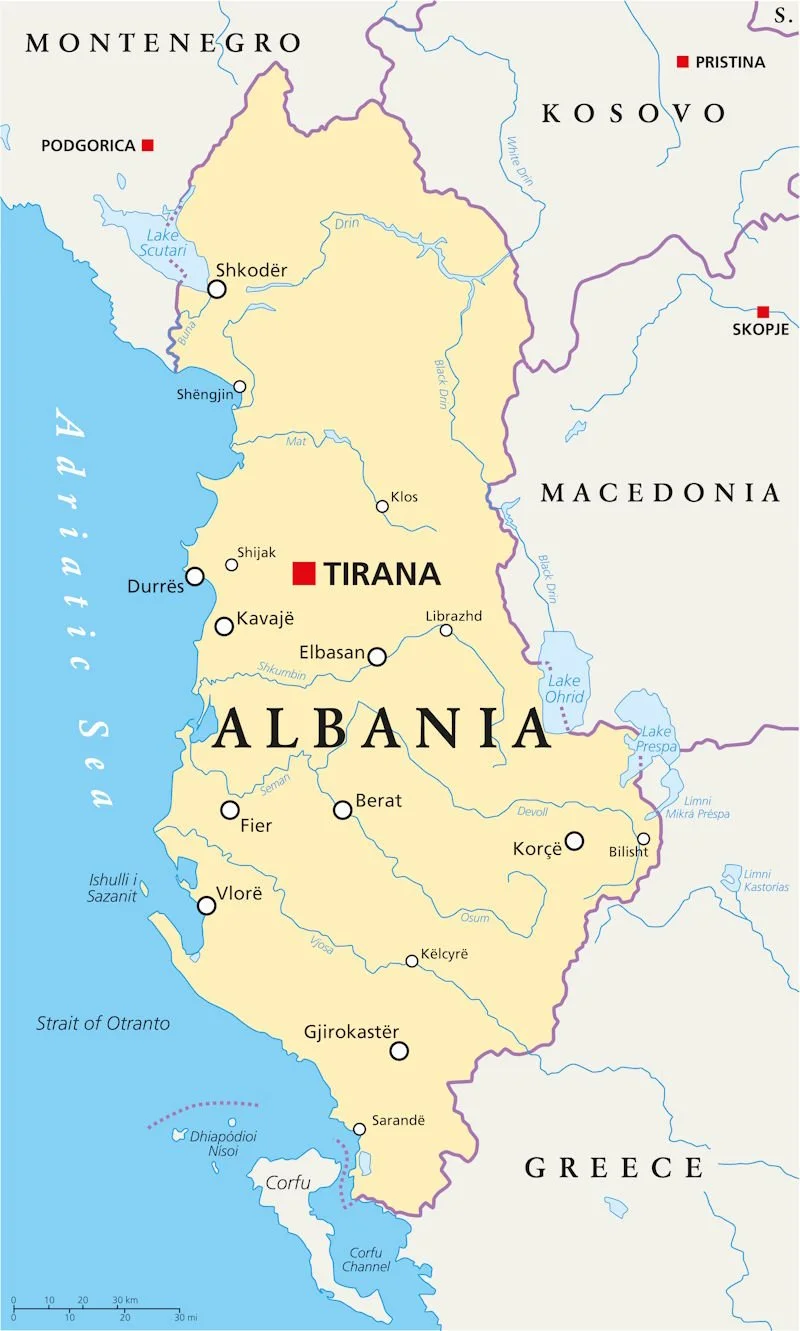
Map by Peter Hermes Furian / Shutterstock.com.
History Note
In ancient times, modern Albania was home to Illyrian people groups. It became part of the Roman Empire in a province named Illyricum. Christianity arrived in the 1st century. The Apostle Paul mentions preaching in Illyricum (Romans 15:19).
After centuries of influence from neighboring Roman, Greek, and Slavic cultures, a distinct Albanian identity began to develop. Though it shares some vocabulary and grammatical structures, the Albanian language is distinct from other languages in the Balkan Peninsula.
The Ottoman Empire took over much of Albania in the 1400s. Many Albanians fled, and many who stayed continued to resist Ottoman control. However, a sizeable portion of the population converted to Islam. A strong movement for Albanian independence grew in the 19th century, with leaders seeking to unify Christian and Muslim Albanians.
During the First Balkan War, Albanian leaders declared independence on November 28, 1912. During peace negotiations at the end of that war, the Albanian region of Kosovo was given to Serbia and part of Southern Albania was given to Greece. Albania struggled during World War I as various armies passed through it. However, the independence of Albania was recognized after the war, and it became part of the League of Nations.
Enver Hoxha came to power in 1944 and ruled Albania until his death in 1985. In 1967 Hoxha sought to impose atheism on the country, closing both churches and mosques. Things began to change in the 1980s and free elections were held in 1992.
Today Albania has a population of 3 million. About 57% are Muslim, 10% Roman Catholic, and 7% Orthodox. Anjezë Gonxhe Bojaxhiu (1910-1997) was born in Albana. She later became known as Mother Teresa.
The celebration of Independence Day on November 28 also commemorates the Albanian flag raised in revolt against the Ottomon Empire in 1443. That flag featured a black double-headed eagle on a red background, and this became the flag of modern Albania.
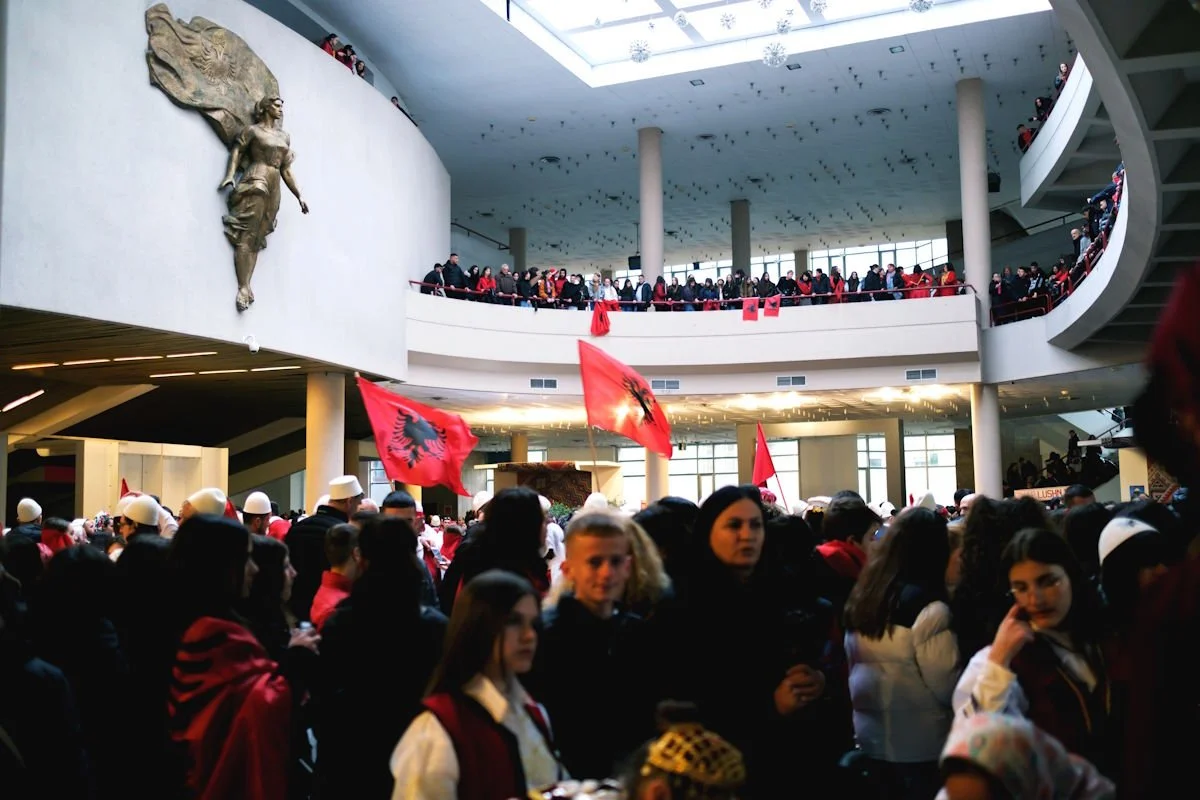
Albanians celebrate Independence Day on November 28, 2023. Photo by arda savasciogullari / Shutterstock.com.
Learn More
Vallja e Tropojës is a traditional dance from Northern Albania. Performed by men, women, and children, the dance accompanies community celebrations such as weddings, birthdays, and initiations.
Watch a 2016 performance from an Albanian television program on YouTube.
Find more resources at Homeschool History.