December 27: Creation of the World Bank (1945)
Prayer Idea
Pray for people who work for the World Bank and the International Monetary Fund.
History Note
In 1944 during World War II, delegates from 44 nations met in Bretton Woods, New Hampshire. Their goal was to create an economic framework that would help countries work together to recover and grow after the war. The delegates created an agreement to establish the International Bank for Reconstruction and Development (IBRD) and the International Monetary Fund (IMF).
These two organizations were formally established on December 27, 1945, after 21 countries had ratified the agreement. U.S. Secretary of the Treasury Fred Vinson issued a statement that day:
History is being written today as we execute these documents and breathe the breath of life into the International Monetary Fund and the International Bank for Reconstruction and Development.
We can be thankful that the history we are now writing is not another chapter in the almost endless chronicle of war and strife. Ours is a mission of peace - not just lip service to the ideals of peace - but action, concrete action designed to establish the economic foundations of peace on the bed rock of genuine international cooperation.
Other separate agencies later joined the IBRD, and all of them became known together as the World Bank. The World Bank first provided loans to countries in Europe to help them rebuild after World War II. In the 1950s, the World Bank started issuing loans to other countries to fund roads, dams, ports, and other infrastructure projects. The World Bank now has about 20,000 employees in countries around the world.
The International Monetary Fund (IMF) is a separate but related organization. Its main original function was to help stabilize the exchange rates of different currencies. The IMF now sees its mission as promoting international monetary cooperation, supporting the expansion of trade and economic growth, and discouraging policies that would harm prosperity. The IMF has about 3,000 employees.
The World Bank and IMF have faced criticism because the largest member countries, particularly the United States, have disproportional influence on the way the organizations operate. The leadership is not directly accountable to regular citizens anywhere. Trying to impose solutions from the top down does not necessarily take into account the actual needs in different countries.
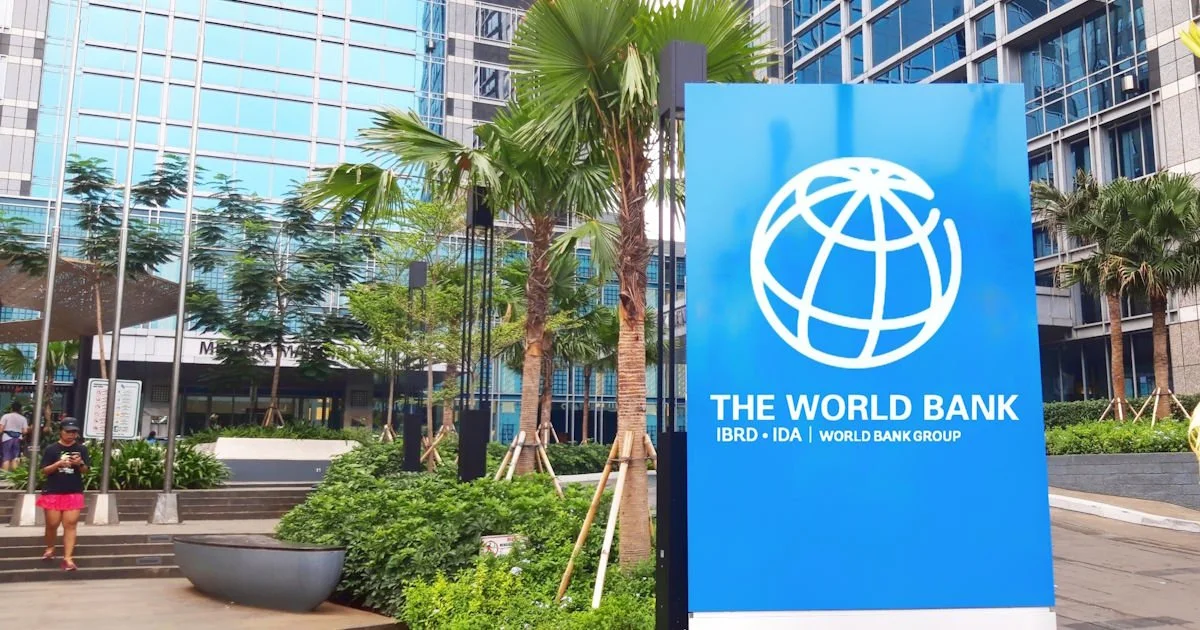
World Bank office in Jakarta, Indonesia. Photo by Poetra.RH / Shutterstock.com.
Learn More
Find out more about the IMF and World Bank.
Find more resources at Homeschool History.