December 12: Jamhuri Day in Kenya
Prayer Idea
Pray for the people and government of Kenya.
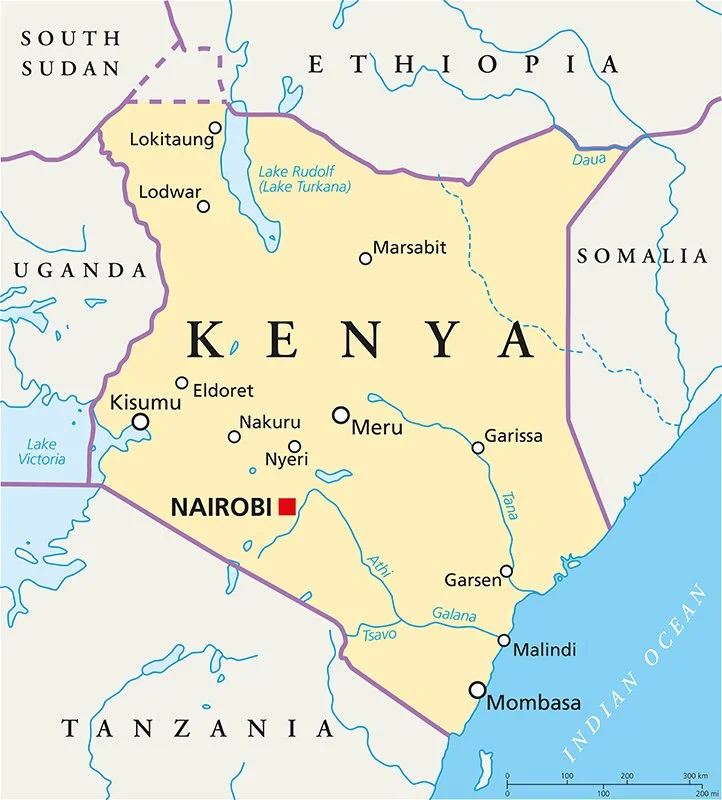
Map by Peter Hermes Furian / Shutterstock.com.
History Note
In ancient times, the coasts of modern Kenya and Tanzania became part of extensive trading networks across the Indian Ocean. The mix of Indigenous Africans and Arab and Persian traders eventually developed the culture and language of Swahili (“people of the coast”). The interior of modern Kenya was home to many ethnic groups, including the Maasai, Nandi, Taveta, Taita, and Kikuyu.
In the 1890s, Germany, France, Italy, and the United Kingdom all competed for control of East Africa. The area known as British East Africa included modern Kenya and Uganda.
In 1920 the British East Africa Protectorate became a colony named Kenya, after the tallest mountain in the region. Some Kenyans began advocating for political reforms. The first Indigenous African member joined Kenya’s legislative council in 1944, and representation gradually increased.
Princess Elizabeth was visiting Kenya in 1952 when she received news that her father, King George VI, had died and that she was the new monarch of the United Kingdom. A group known as the Mau Mau launched a violent revolt against British control later that year. The British declared a state of emergency that lasted for several years.
Kenya finally became fully independent on December 12, 1963. Kenya became a republic the next year, with Jomo Kenyatta as the first president. The country celebrates December 12 as Jamhuri Day. “Jamhuri” is the Kiswahili word for “republic.”
Today Kenya has a population of 58 million who belong to many ethnic groups. About 85% belong to a Christian denomination and 11% are Muslim. English and Kiswahili are both official languages.
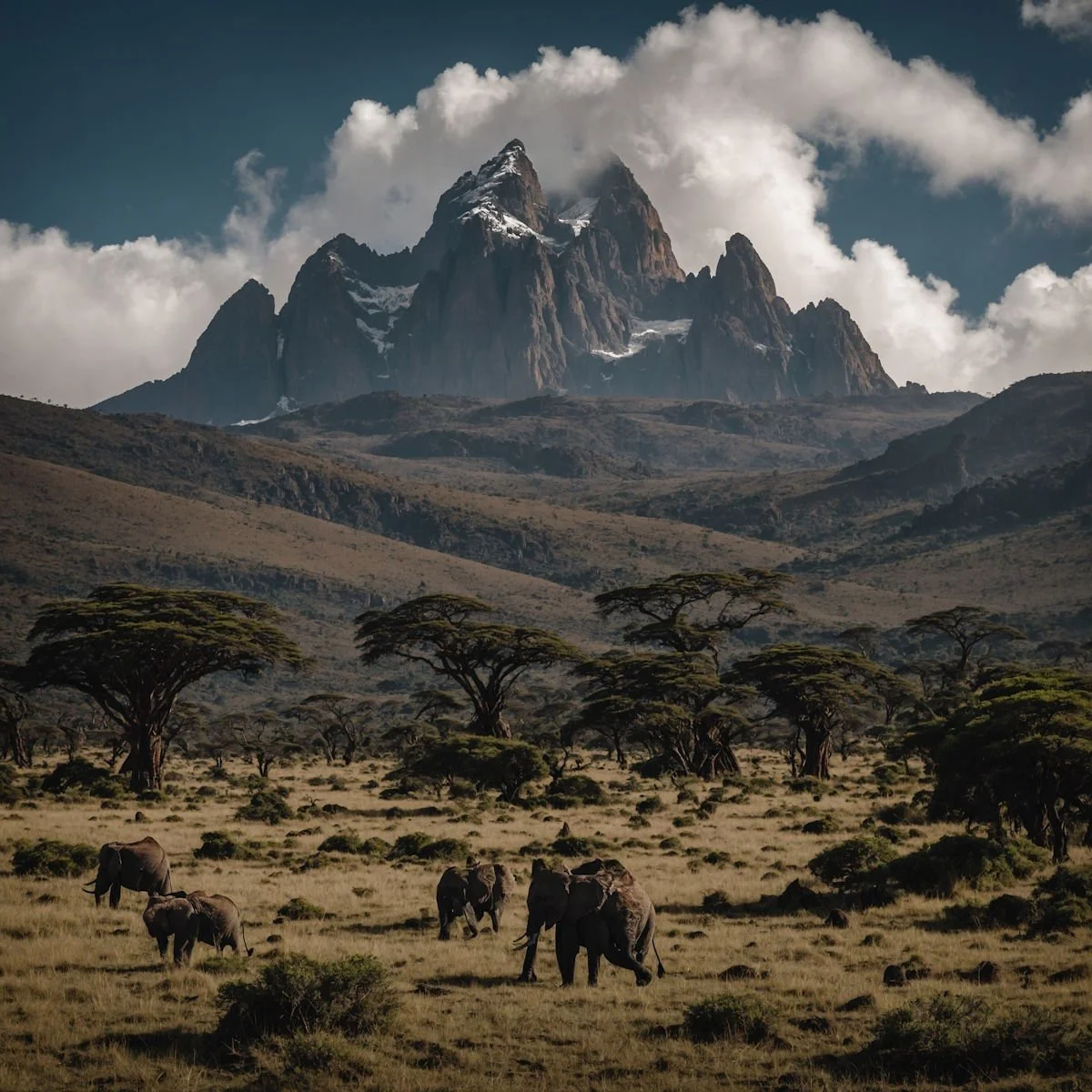
Mount Kenya (17,057 feet) is the second-tallest peak in Africa, after Mount Kilimanjaro (19,341 feet) in neighboring Tanzania. Photo by Naeemphotographer2 / Shutterstock.com.
Learn More
The government of Kenya established the Permanent Presidential Music Commission in 1998. Its mandate is support the preservation and promotion of music and dance in the country.
This is one of a series of videos sponsored by the commission for Jamhuri Day. It features the adeudeu, a harp played by the Tesos of Kenya. The instrument is used to accompany Teso music on occasions such as the birth of a child, a harvest, or a burial ceremony.
Find more resources at Homeschool History.