December 29: Independence Day in Mongolia
Prayer Idea
Pray for the people and government of Mongolia.
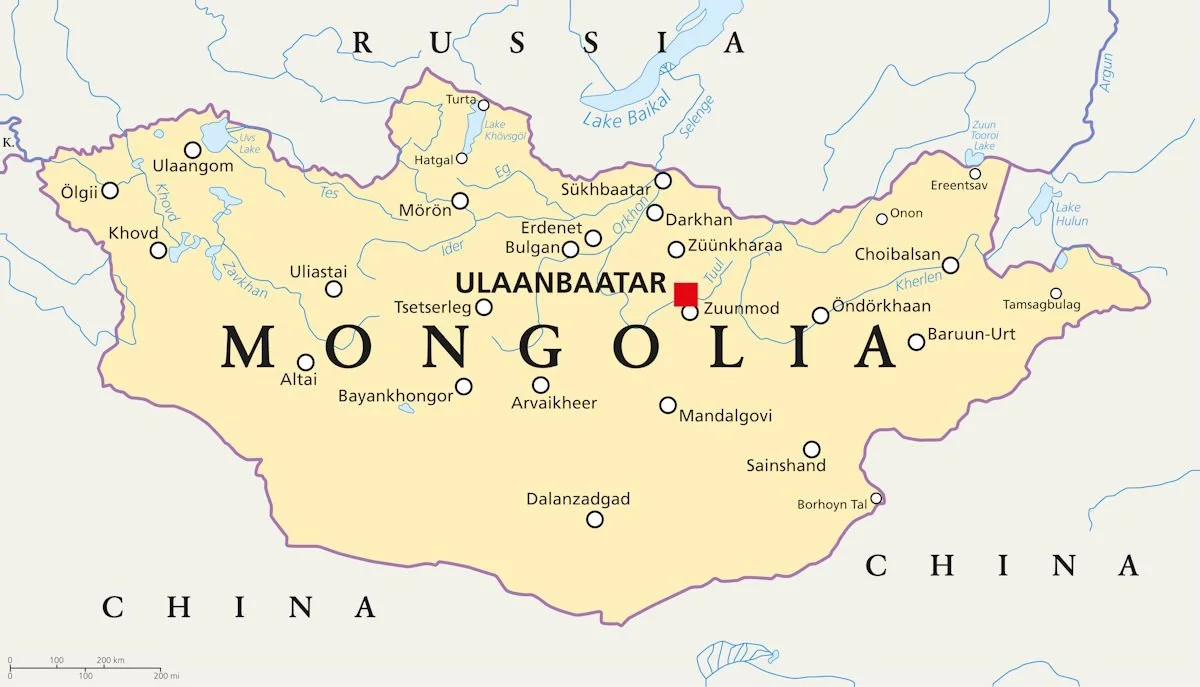
Map by Peter Hermes Furian / Shutterstock.com.
History Note
The Mongols are a people group whose homeland is in Central Asia. They have been prominent in Asian and European history for centuries.
Temüüjin was born into a Mongol family about 1162. He became famous (or infamous) as Genghis Khan. Genghis Khan and his sons led conquests that took over a huge portion of Asia plus parts of the Middle East and Eastern Europe. After the death of Genghis Khan in 1227, his descendants controlled and expanded different parts of the empire. Kublai Khan, a grandson of Genghis Khan, established the Yuan Dynasty in China.
Genghis Khan adhered to Tengrism, a traditional Mongolian religion, while allowing some freedom of religion among conquered peoples. Some Mongols, including Kublai Khan, became Buddhists, and Buddhism became the official religion for many Mongols in the 1500s.
Over the centuries, the Mongols had continuing conflict with the Chinese. The Qing Dynasty of China took control of modern Mongolia in the 17th century. After the collapse of the Qing Dynasty in 1911, Mongolia secured its independence from China with help from the Soviet Union. A socialist government took control of Mongolia in 1924. Though Mongolia did not become a Soviet Socialist Republic, it was heavily influenced by and dependent on the Soviet Union until the 1990s.
Today Mongolia is a semi-presidential republic with a population of three million. The large majority are from the Khalkh people group, one of several Mongol ethnic groups. About half of Mongolians identify as Buddhist and 40% have no religious affiliation. There are small groups of Muslims, Shamanists, and Christians.
Since 2011, the country has celebrated December 29 as the Day of National Liberation Movement and Independence, commemorating the declaration of independence from China in 1911.
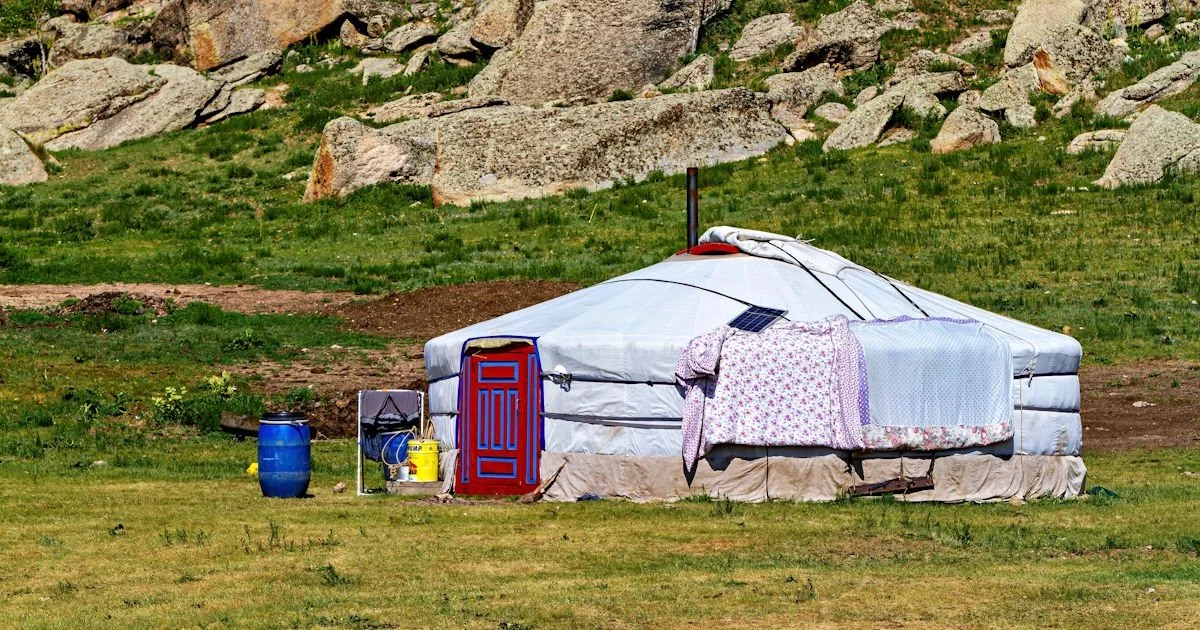
An historic Mongolian word, tuurgatan, means “people of the felt-walled tents". About 30% of Mongolians maintain a semi-nomadic lifestyle, living in gers (also called yurts) and moving their herds from place to place. Photo by hecke61 / Shutterstock.com.
Learn More
Take a look inside a modern Mongolian ger.
Please Note: There are playful references to items being sacred.
Find more resources at Homeschool History.