December 30: Rizal Day in the Philippines
Prayer Idea
Pray for the people and government of the Philippines.
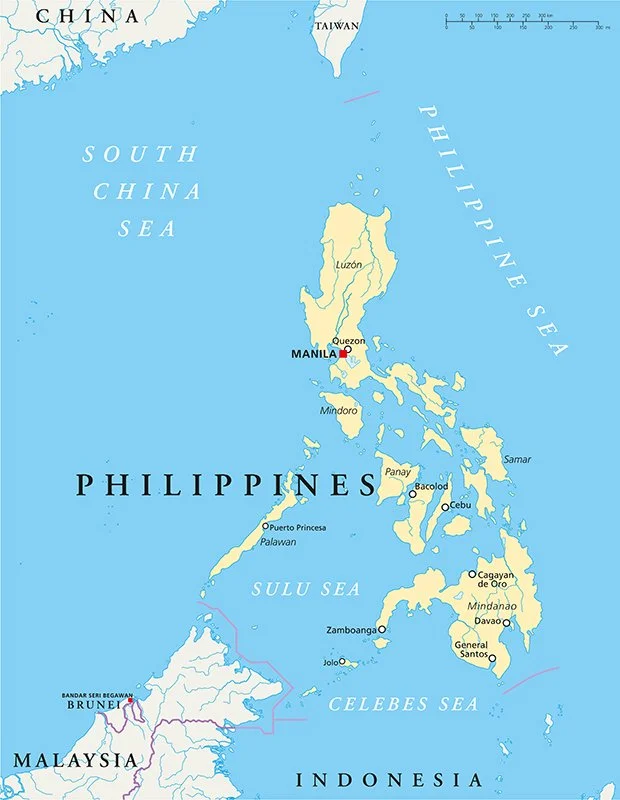
Map by Peter Hermes Furian / Shutterstock.com.
History Note
The Philippines is an archipelago of thousands of islands south of Taiwan, east of Vietnam, and north of Malaysia and Indonesia. Over the centuries, these islands have been home to dozens of ethnic groups who speak multiple distinct languages.
The religion of Islam began to spread in the islands in the 1400s. The Spanish came in the 1500s. Ferdinand Magellan claimed the islands for Spain during his attempted journey around the world. He died during a battle with a local leader in 1521. The Spanish established their first permanent settlement in Cebu in 1565 (the same year the Spanish established St. Augustine in Florida).
The Spanish named the islands after King Philip II, who ruled the Spanish Empire from 1556 to 1598. Though the majority of the population eventually accepted Roman Catholicism, many Filipinos in the southern islands—whom the Spanish called Moros—remained Muslim.
As the power of the Spanish Empire declined in the 19th century, Filipinos advocated for change. José Rizal (1861-1896) was a doctor, author, and activist. He called for political reforms, not full independence. Another Filipino group launched a violent revolt against Spain in 1896. Though Rizal had no connection to that group, Spanish authorities arrested and imprisoned him. Rizal was executed on December 30, 1896.
Filipinos fought for independence until 1898, the same year that the United States fought a war against Spain. Spain lost the Spanish-American War, and the United States gained control of the Philippines. Though the Filipinos had provided assistance to the United States in defeating the Spanish, the U.S. government decided not to grant them independence immediately.
U.S. troops fought a brutal three-year war against Filipinos who resisted American rule. Over 4,000 American soldiers and 20,000 Filipino soldiers died. Perhaps 200,000 Filipino civilians died because of violence, famine, and disease.
In 1935 the U.S. government finally agreed to a 10-year period of of transition toward independence. During this time, the Philippines was a U.S. commonwealth. The Philippines became a major battleground during World War II as the Japanese invaded and the U.S. later retook the islands.
On July 4, 1946, the Philippines formally became an independent nation. Today it is a presidential republic with about 120 million people. Though Spanish is no longer widely spoken, the Indigenous language Tagalog borrowed many words from Spanish. This Filipino language and English are the two official languages.
About three-fourths of Filipinos are members of the Roman Catholic Church. The Philippines is one of only two countries in Asia with a majority Roman Catholic population. (The other is Timor-Leste.) Many other Filipinos belong to another Christian denomination. About 6% are Muslim.
In 1898 Filipino leader Emilio Aguinaldo recognized December 30 as a day of mourning in honor of José Rizal and other victims of Spanish domination. This date remains an important holiday for the Filipino people with solemn ceremonies honoring Rizal.
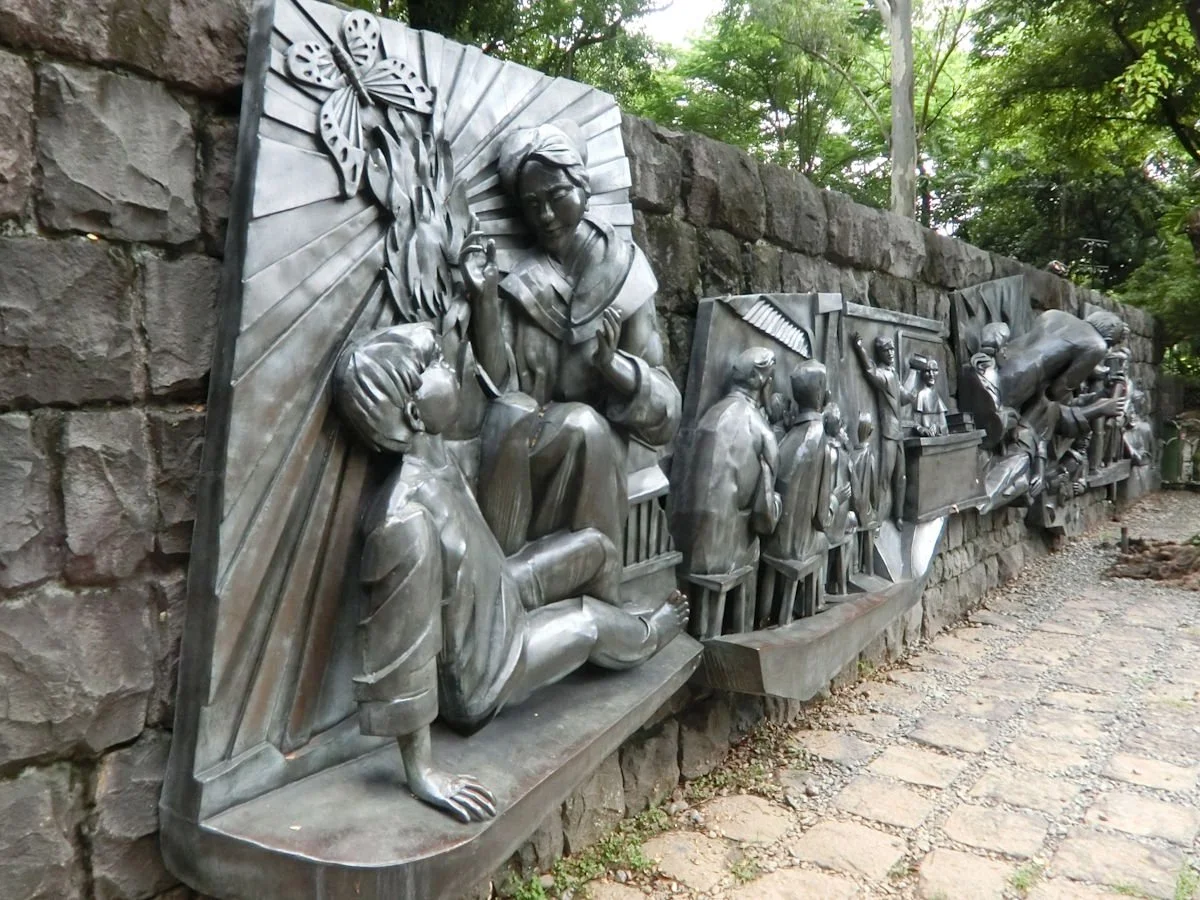
Rizal Park in Manila is located around the site of the 1896 execution of José Rizal. It now is home to monuments honoring him. Photo by rainyclub / Shutterstock.com.
Learn More
This video shows where José Rizal spent his final days before his execution.
Please Note: The video shows statues representing Rizal's execution while describing him being shot in the back.
Find more resources at Homeschool History.